“Getting lucky” as a flower requires a bit more tact than a courtship ritual given that plants are anchored to the ground and lack awareness as to where a suitable mate resides. Life in the Wet Zone, part of the Kindgom of Plants 3D series, examines some of the many tricks of the trade for... Continue Reading →
Love’s Labors Lost: Virgin Births from Komodo Dragons to Sharks
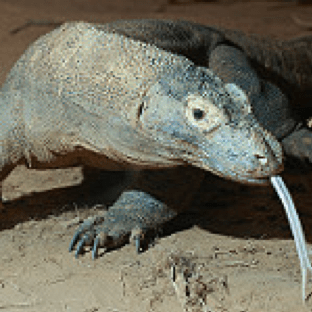
In 2005, on a seemingly normal day at the London Zoo, a small yet sensational event took place-a female komodo dragon gave birth in isolation, without a male in sight. Such is how Episode One, Season 2 of David Attenborough’s Natural Curiosities opens, with narrator David Attenborough delving into the unique process that has led... Continue Reading →
Fiery Wings in Sky
If you’re close enough, the gusty waves produced from the flapping of a vulture’s wings can be quite palpable. Take, for example, Griffon Vultures. They are one of the largest species of vultures, weighing up to eleven kilos and having a wing span of over two meters. It is no easy task for creatures of... Continue Reading →
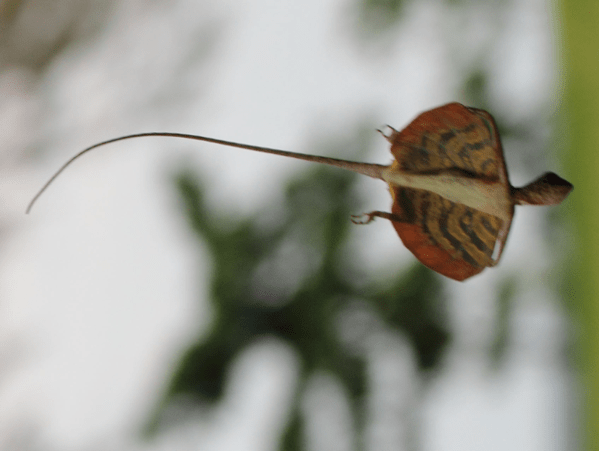
At first glance the Draco lizard looks like your typical lizard, a small scaly reptile with clawed feet and a long tail. However, these lizards have an extraordinary feature that allows them to easily travel throughout their environment. The Draco lizards have wings! These wings are not analogous to the wings of a bird, but... Continue Reading →
The Bleaching of 1998: Devastation of Corals in the Western Indian Ocean and Beyond
In "ABC Australian Story: Into Hot Water", professor Ove Hoegh-Guldberg explains that bleaching events in the Western Indian Ocean caused an approximately 46% decrease of corals in late summer 1998. This bleaching started from small shallow warm water regions, called “hotspots,” and eventually lead to massive coral bleaching over a 6 months period in many... Continue Reading →
Illuminating the Evolutionary Past of Bioluminescent Fish
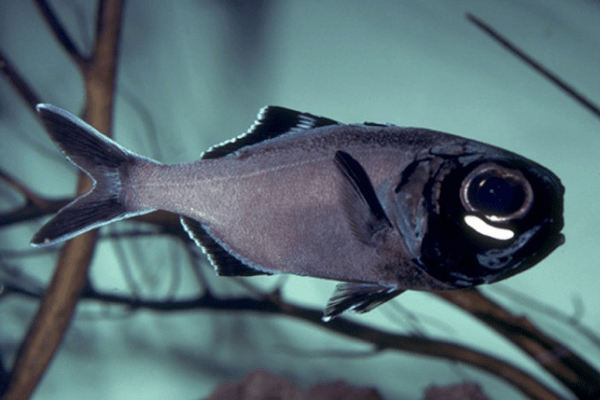
In David Attenborough’s documentary episode “Life that Glows”, several different organisms that utilize bioluminescence are featured, and these organisms use bioluminescence to improve fitness in terms of attracting mates or prey. Splitfin flashlightfish (Anomalops katoptron) are a nocturnal deep-sea fish specifically discussed in this documentary. These fish use torch-like organs under their eyes to identify... Continue Reading →
Making Waves with Marine Iguanas
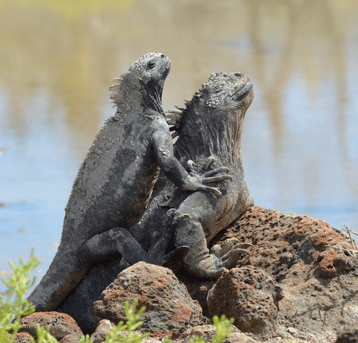
The Galápagos Islands have a rich history in the field of evolutionary biology. In addition to being the islands where Darwin developed his theory of natural selection, it is also home to thousands of species of animals. One of these species is the marine iguana, or Amblyrhynchus cristatus, a land-dwelling reptile that can, fascinatingly, forage... Continue Reading →
Beating of My Chest
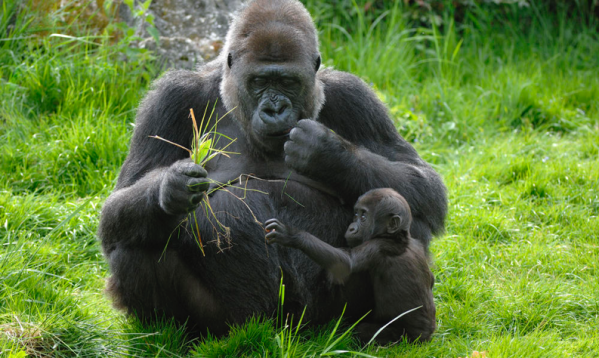
In Life: Season 1 Episode 10, David Attenborough explores the social interactions and behavior of various primates that live around the world. Particularly in the Congo Basin, many populations of Western Lowland Gorillas (Gorilla gorilla gorilla) inhabit the dense rainforest. Living in family packs, gorillas are led and protected by one silverback male. As the... Continue Reading →
The Unusual Life of the Glowing Deep Sea Fisherman
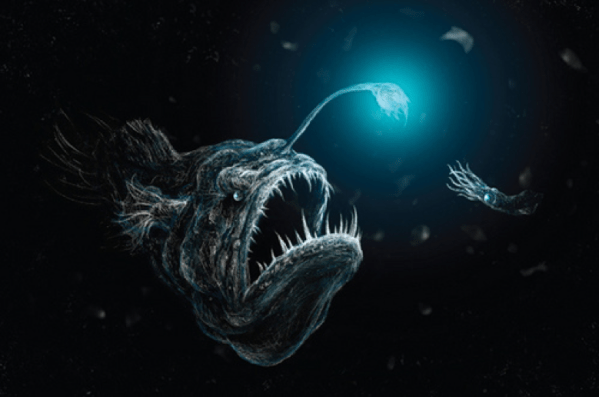
Anglerfish shine a light in perpetual darkness, but beware: Not all lights lead to safety. Anglerfish use bioluminescence to attract prey in the deep ocean. In The Blue Planet, a deep sea angler fish swims rapidly with its angler waving back and forth in constant motion. Anglerfish obtained their name from using their lures in... Continue Reading →
Teamwork makes the dream work
If I were to think of what types of animals hunt in groups, I’d probably say something like wolves, hyenas, lions, maybe even my friend Kevin. That’s why when Season 1, Episode 1 of Frozen Planet depicted killer whales using coordinated and precise hunting techniques, I couldn’t believe my eyes. It turns out that even... Continue Reading →