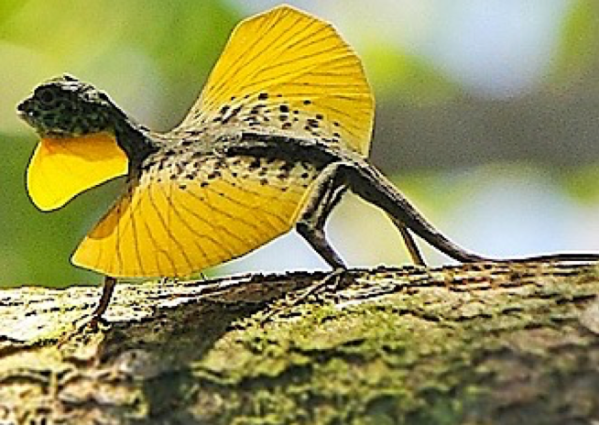
Lizards have a ‘fly’ mechanism of fleeing from predators, as depicted by Sir David Attenborough in Season 1, Episode 3 of Planet Earth II. In the documentary, he explains that Draco lizards (genus Draco), who are merely the size of a pencil and have an appetite for ants, can soar over 30 meters in a... Continue Reading →
Grooming the Next Generation: The Gelada Social Network
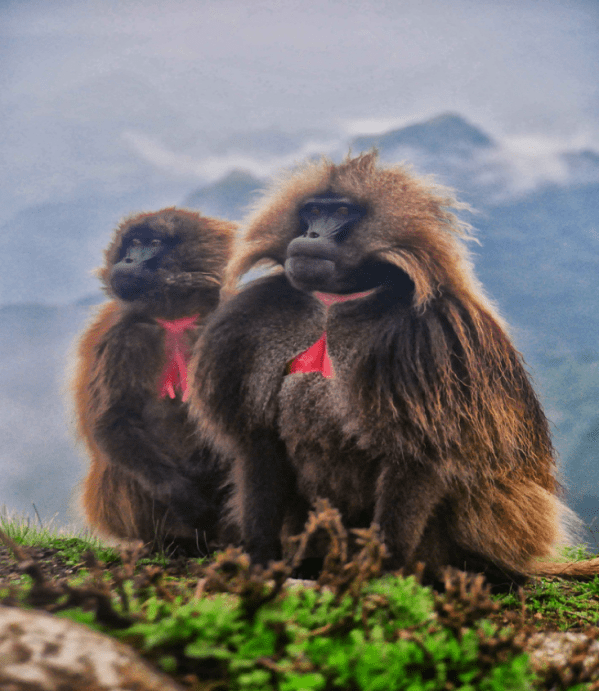
It appears that, just like us, Gelada baboons love to network. In Season 1, Episode 1 of Planet Earth, David Attenborough describes how, like other primates, Gelada baboons use morning time as a chance to groom. However, unlike other primates, the Geladas chatter constantly during grooming in an effort to network with others. The Gelada... Continue Reading →
Not so Tiny Tortoises
Anyone who has taken an evolutionary biology class knows about Darwin’s famous trip to the Galapagos during which he observed the natural phenomena that influenced the development of his Theory of Evolution. On this trip, one of the most well-known examples of his observations were the giant Galapagos tortoises (Chelonoidis nigra), the largest land turtles,... Continue Reading →
The Vivacious Relic of the Seas
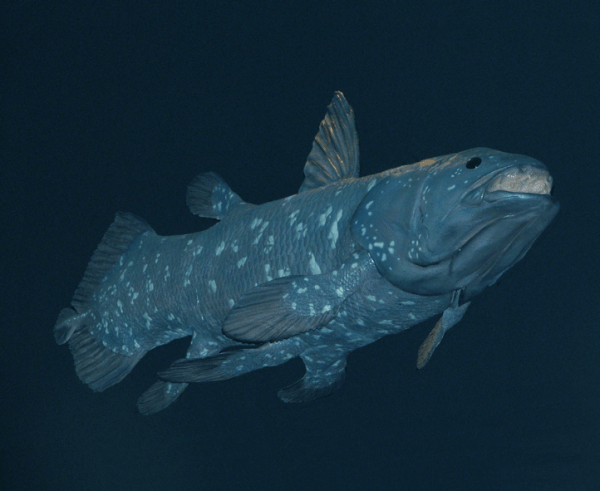
For a long time, scientists only knew Coelacanth from fossils, assuming that they went extinct over 60 million years ago. However, in 1938, a live Coelacanth was captured near South Africa, as described in Coelacanth, one of Sir David Attenborough’s first documentaries. Scientists were astounded by this discovery because it was a novel clue as to... Continue Reading →
King of The Fig Trees
According to David Attenborough in Planet Earth, Season 1, Episode 8 “Jungles”, fig trees and other fruiting trees are very valuable, causing many monkeys to be territorial. Siamang Gibbons claim their territory through their calls, starting with a duet between the dominant male and female and then spreading through their group. But how does this... Continue Reading →
To Breathe or not to Breathe: Adaptations of Deep Diving Marine Iguanas
In the episode Islands of Planet Earth II, majestic marine iguanas steal the show with their ability to thrive on a barren, volcanically active island. These marine iguanas live on Fernandina, one of the Galapagos Islands, and can swim up to 30 meters by holding their breath for up to half an hour [1]. But... Continue Reading →
Lyre Lyre Pants on Fire
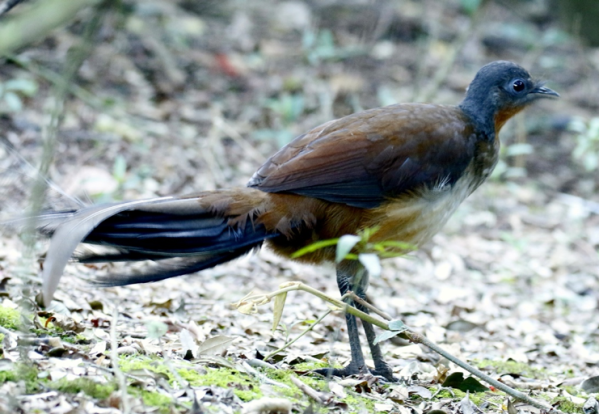
In the midst of the forest, one may experience a cacophony of sounds. The songs from a myriad of bird species, the rumbling of a chainsaw, and the piercing cry of a car alarm from a nearby road are all noises permeating the thick brush in Episode 6 of Life of Birds, Season 1. What... Continue Reading →
The FLYzards
The Draco Lizard appears in Episode 3 of Planet Earth II Season 1. In the documentary, Attenborough describes how Draco lizards can fly up to 30 meters at a stretch to avoid combat or search for food. In this particular instance in the documentary, a Draco lizard is shown surveying a tree for food. However,... Continue Reading →
The Light Show of the Deep Sea
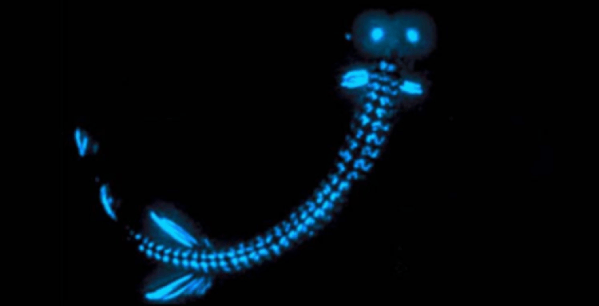
At the deepest depths of the ocean, where sunlight can no longer penetrate, there is a complex ecosystem of organisms functioning in complete darkness. The creatures of the deep sea have evolved impressive ways of dealing with the darkness that engulfs them, and one method in particular, bioluminescence, is present at remarkably high frequencies. This... Continue Reading →
The Power of Learning for Predator-Prey Relationships
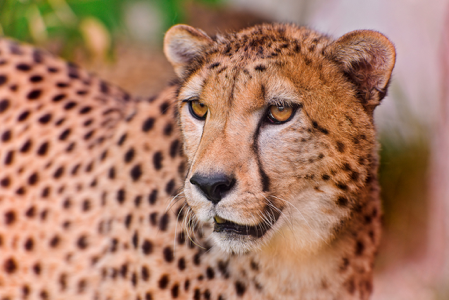
In Season 1, Episode 7 of Life, David Attenborough claims life in the wild is most intense between predator and prey. In order to survive, one must out smart the other. In this episode, we see three male cheetahs that hunt prey other cheetahs would not dare to go near. Why? Cheetahs typically do not... Continue Reading →