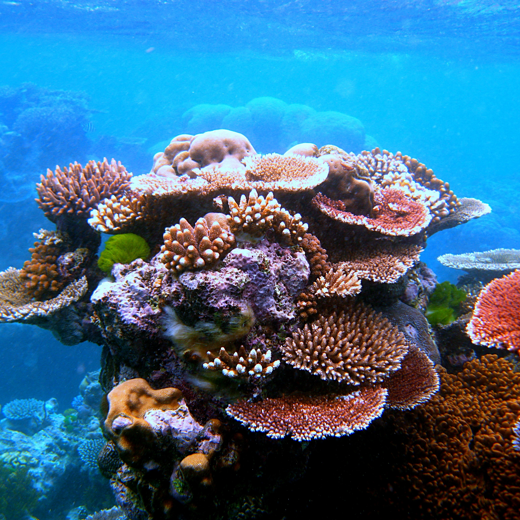
Why did the limestone feel unappreciated? Because they thought they were being taken for granite! Fortunately, they are appreciated by coral reefs. Coral reefs are large underwater ecosystems that are home to thousands of different underwater species. In fact, they are commonly known as the rainforests of the sea due to their rich diversity. In... Continue Reading →
The Disappearance of the Great Hunt
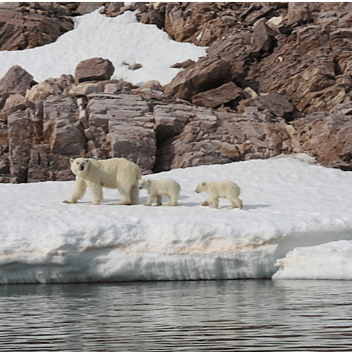
Polar bears occupy a unique niche in the Arctic. They are extraordinary terrestrial hunters who prey on some of the largest aquatic animals found in the Arctic, including beluga whales and ringed seals, the main source of their diet. Blue Planet portrays the increasing struggle that polar bears face: feeding their offspring and themselves in... Continue Reading →
The Unusual Life of the Glowing Deep Sea Fisherman
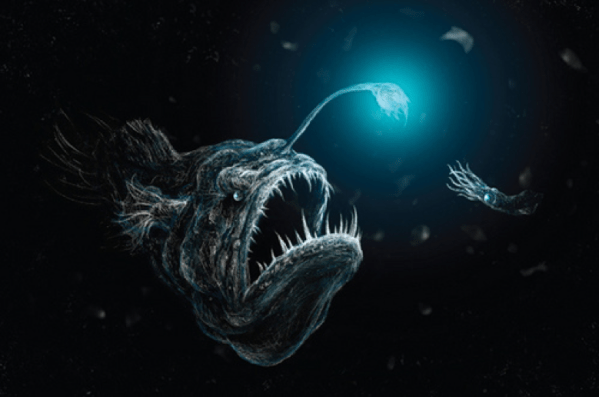
Anglerfish shine a light in perpetual darkness, but beware: Not all lights lead to safety. Anglerfish use bioluminescence to attract prey in the deep ocean. In The Blue Planet, a deep sea angler fish swims rapidly with its angler waving back and forth in constant motion. Anglerfish obtained their name from using their lures in... Continue Reading →
The Light Show of the Deep Sea
At the deepest depths of the ocean, where sunlight can no longer penetrate, there is a complex ecosystem of organisms functioning in complete darkness. The creatures of the deep sea have evolved impressive ways of dealing with the darkness that engulfs them, and one method in particular, bioluminescence, is present at remarkably high frequencies. This... Continue Reading →
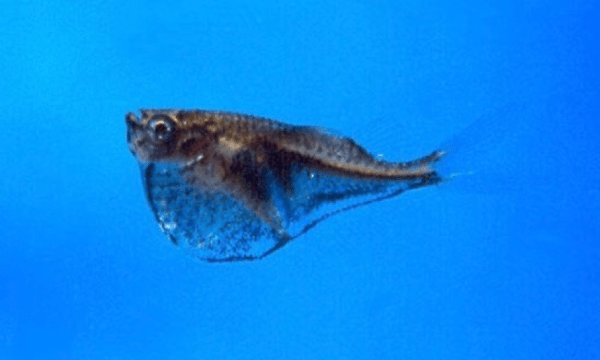
Hatchet Fish: An Evolutionary Race Against Time and Predators
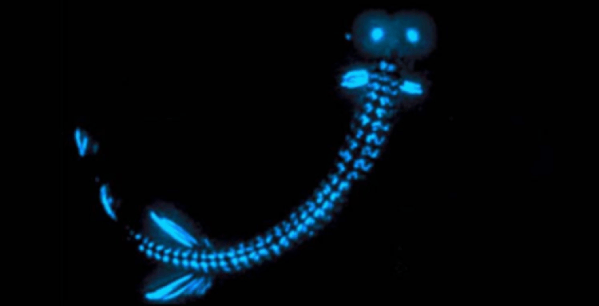
As long as there have been predators, there have been prey developing mechanisms to avoid them. Whether through the development of offensive strategies or through concealment, prey have adapted countermeasures to avoid predation. This has resulted in an evolutionary arms race, each competing against the other for survival. Take for example the Hatchetfish, Sternoptyx pseudobscura... Continue Reading →
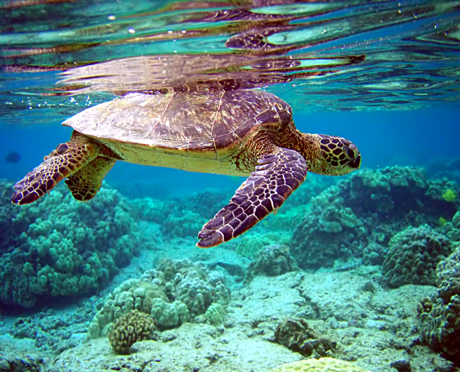
Slow, but Steady Wins the Race: Migratory Movements of Sea Turtles
Many animals make very long migrations to feed and breed. In episode 8 of The Blue Planet: A Natural History of the Oceans season 1, Attenborough describes the migratory movements of green sea turtle females. Each year up to 5,000 female green sea turtles that live off the coast of Brazil swim a long journey... Continue Reading →